

Heat Pump Installation Beaverton
One system for heating and cooling, lower operating costs than a gas furnace paired with central AC, and Oregon Energy Trust incentives that can offset a meaningful chunk of the upfront cost. Heat pump installation in Beaverton, OR is what we do — load calculations, permits, and commissioning included. Written quote before anything gets ordered.
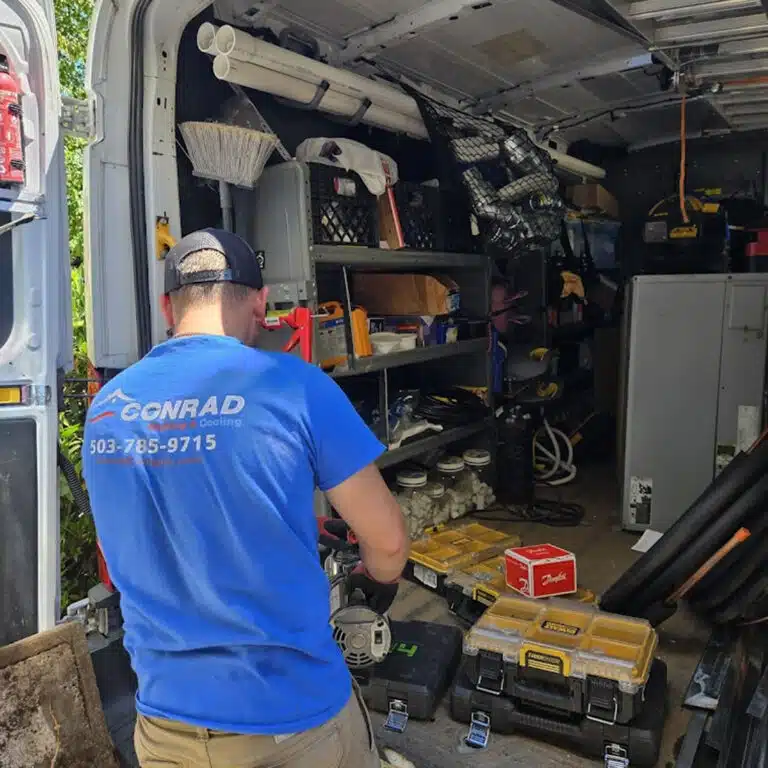
Professional Heat Pump Installation in Beaverton, Oregon
Oregon has moved hard toward heat pumps over the last five years. The reasons aren’t complicated — a single system that heats and cools, efficiency ratings that beat gas furnaces at moderate temperatures, and state incentives through Oregon Energy Trust that reduce the upfront cost. In Beaverton specifically, where winters are damp and mild rather than brutal, heat pumps operate in their efficiency sweet spot for most of the heating season.
What the marketing doesn’t explain is why two identical heat pump installations in identical houses can produce very different results.
Refrigerant line set length and routing affect system capacity. An outdoor unit mounted 50 feet of line set away from the air handler loses efficiency that the manufacturer’s rated SEER2 number doesn’t account for. Duct static pressure determines whether the air handler can actually move the conditioned air through the house — a heat pump pushing against undersized return ducts will struggle to hit setpoint on a cold day regardless of its rated capacity. Electrical service has to support the load — most heat pump installations require a dedicated 240V circuit sized correctly for the equipment, and older Beaverton homes with 100-amp panels sometimes need a service upgrade before the installation can happen.
These aren’t exceptions. They’re the normal variables that a thorough site assessment catches before installation day.
We start every heat pump installation in Beaverton with a Manual J load calculation — the ACCA method required by Oregon mechanical code. Your home’s insulation values, ceiling height, window area, air infiltration, and Washington County climate data go into it. The output is a specific heating and cooling load in BTUs. We specify equipment to match that number, not whatever happens to be available at the distributor.
Duct condition gets assessed separately. A high-efficiency heat pump connected to a leaky duct system with inadequate return air is going to disappoint you — the efficiency numbers on the spec sheet assume proper air distribution. If the ducts need attention, that goes into the quote upfront.
Every beaverton heat pump installation we complete is permitted through Washington County Building Department — mechanical and electrical permits, inspected and signed off. Oregon requires it. The permit record protects you at resale, satisfies manufacturer warranty requirements, and confirms the installation was done to code.
Heat Pump Installation and Related HVAC Services

Gas, oil, and electric furnace repair across Beaverton — before a cold snap makes it urgent.

Something wrong with an existing system? We diagnose and repair all major AC brands across Beaverton and Washington County.

No heat? We repair furnaces, boilers, and electric heating systems — and restore warmth fast, done right the first time.
Ducted and ductless heat pump repair — the year-round systems Oregon homes rely on most.
One licensed team for any heating, cooling, or ventilation fault. Honest diagnosis, no guesswork.
Ductless single-zone and multi-zone systems for rooms, additions, and homes without existing ductwork.
Heat Pump Systems We Install in Beaverton, OR
Ducted Heat Pumps
The most direct replacement path for homes that already have a forced-air duct system. The outdoor unit connects to an indoor air handler in place of — or alongside — an existing furnace. Modern cold-climate ducted heat pumps from Trane, Carrier, and Lennox maintain full heating capacity down to 5°F outdoor temperature. Beaverton's average January low is around 35°F. The math works well here. Efficiency ratings on ducted heat pumps currently range from SEER2 16 to SEER2 22 for cooling, with HSPF2 ratings between 8.5 and 11 for heating. The difference in operating cost between the low and high end of that range is real over a 10-year horizon — worth factoring into the equipment decision rather than just buying on upfront price.
Dual Fuel Systems
A heat pump paired with a gas furnace as backup heat. The heat pump handles the heating load efficiently when outdoor temperatures stay above 35°F — which covers the majority of the Beaverton heating season. Below that threshold, the control system switches automatically to the gas furnace. Dual fuel makes the most financial sense for homes replacing aging equipment on both the heating and cooling sides simultaneously, where you're already absorbing the cost of new equipment in both categories.
Ductless Mini Split Heat Pumps
For homes without ductwork, room additions, converted garages, and ADUs. A single outdoor compressor connects to one or more indoor wall-mounted heads — each controlled independently. Mitsubishi Electric MXZ multi-zone systems, Daikin, LG, Fujitsu. Single-zone installations for one room or space are the most common. Multi-zone configurations with two, three, or four indoor heads from one outdoor unit cost more upfront and less than running separate systems for each space.
Cold-Climate Heat Pumps
A specific product category — not a marketing term. Mitsubishi's Hyper Heat line, Bosch's IDS series, and Daikin's Aurora cold-climate models are engineered to maintain heating capacity at outdoor temperatures down to -13°F. For Beaverton this is rarely tested, but it eliminates the concern about heat pump performance during unusual cold snaps. Worth considering if you're replacing a gas furnace and plan to remove gas service entirely.
Heat Pump Incentives for Beaverton Homeowners
This is where beaverton heat pump installation gets financially interesting.
Oregon Energy Trust offers cash incentives for heat pump installations that meet efficiency thresholds — currently up to $1,500 for a qualifying ducted heat pump and up to $500 per zone for ductless mini splits. These are direct rebates, not tax credits, which means they reduce the net cost of installation regardless of your tax situation.
Federal tax credits add to that. The Inflation Reduction Act’s 25C credit covers 30% of qualifying heat pump installation costs, up to $2,000 per year. Combined with Oregon Energy Trust incentives, a qualifying ducted heat pump installation can see $3,000–$4,000 in combined incentives offset against the total cost.
The equipment has to meet specific efficiency minimums to qualify — not every heat pump on the market does. We spec equipment that hits those thresholds when it makes sense for your home, and we’ll tell you what the actual incentive picture looks like for your specific installation before you commit to anything.
One thing worth being clear about: incentive programs change. Oregon Energy Trust periodically adjusts rebate amounts and eligibility requirements. The numbers above reflect current program terms — verify current incentives at energytrust.org before making decisions based on them.
How Our Heat Pump Installation in Beaverton, OR Works

Home Assessment & Load Calculation
We visit your home, inspect the existing system and duct work if applicable, assess electrical panel capacity, measure the spaces, and run a Manual J load calculation. About an hour. No charge.
System Recommendation & Written Quote
You get a specific recommendation — system type, brand, model, efficiency rating — with a written price covering equipment, labor, permits, electrical work, refrigerant line set, and any duct modifications identified in the assessment.
Installation Day
Old equipment removed and disposed of. New heat pump installed, refrigerant system leak-tested and charged to manufacturer spec, electrical confirmed, airflow balanced, thermostat or control system configured. Full heating cycle run before we close out the job.
Why Choose HVAC Beaverton for Heat Pump Installation
Right-sized systems, clean installs, and paperwork handled — from permit to final inspection.
Family Owned & Local
A Beaverton-based crew that installs like it's our own home — no subcontractors, no shortcuts.
One-Day Installation
Most residential installs are completed in a single day, scheduled around your routine.
Licensed & Certified
CCB-licensed, EPA 608-certified installers. Every job is permitted and inspection-ready.
What Our Customers Say
Schedule Your Heat Pump Installation in Beaverton, OR
- Customer Focused
- Five-Star Service
- Satisfaction Guaranteed
Frequently Asked Questions
Ducted heat pump installations typically run $5,500–$12,000 depending on system size, efficiency tier, and electrical work required. Ductless mini split systems for a single zone run $3,000–$5,500 installed. Multi-zone ductless systems run $6,000–$14,000 depending on the number of indoor heads. After Oregon Energy Trust and federal tax credit incentives, net costs drop meaningfully for qualifying installations. You get an exact written quote after the home assessment.
Yes — better than most homeowners expect. Beaverton's average winter temperatures sit comfortably in the range where heat pumps operate most efficiently. Even during cold snaps, modern cold-climate models maintain full capacity well below what Washington County typically sees. The 2021 heat dome was the stress test for cooling — heat pumps handled it as well as any other system.
Ducted system replacement in a home with existing ductwork in good condition: one day. Ductless single-zone installation: one day, usually 6–8 hours. Multi-zone ductless with three or four heads: one full day to a day and a half. Installations requiring electrical panel upgrades add time — we'll tell you upfront.
Yes. Mechanical and electrical permits are required for heat pump installation in Oregon. Washington County inspects the work. We file the permits and schedule the inspection as part of the job.
A mini split is a type of heat pump — specifically a ductless one. When people say "heat pump" they usually mean a ducted system connected to a central air handler and existing ductwork. Mini splits use refrigerant lines running directly to wall-mounted indoor heads, with no ductwork involved. Both heat and cool. The right choice depends on whether your home has usable existing ductwork.
Ducted systems: Trane, Carrier, Lennox, Goodman. Ductless and cold-climate systems: Mitsubishi Electric, Daikin, LG, Fujitsu, Bosch. Brand selection depends on system type, efficiency goals, incentive eligibility, and budget. We'll walk through the options with actual specs — not a sales pitch for whichever brand pays the highest dealer margin.