

Heating Installation Beaverton
Old system finally gave out, or you’re upgrading before next winter hits – heating installation in Beaverton, OR is what we do. CCB-licensed technicians, load calculations on every job, permits filed with Washington County, and every system commissioned to manufacturer spec before we leave. No guesswork. No surprises on the invoice.
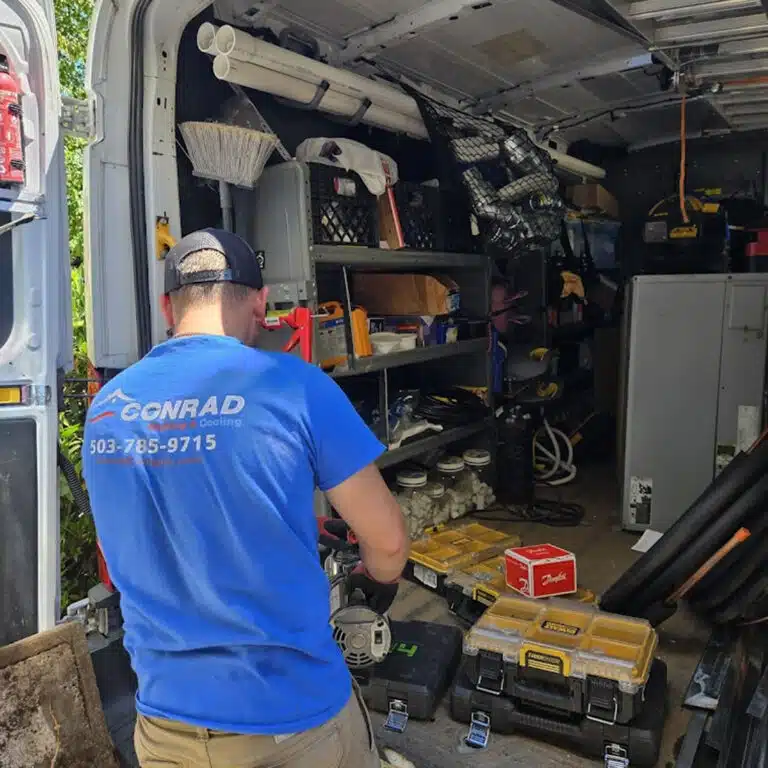
Professional Heating Installation in Beaverton, Oregon
Beaverton winters don’t look brutal on paper – average January lows hover around 35°F, and snow is more of an event than a routine. But the Willamette Valley’s damp cold is persistent. Three weeks of gray sky, 38°F, and moisture that settles into poorly heated rooms does more damage to comfort – and to the people living in the house – than a single hard freeze. A heating system that can’t keep up with that isn’t a minor inconvenience.
This is where installation quality separates itself from installation speed.
The most common mistake in residential heating installation is oversizing. A contractor measures square footage, multiplies by a rule-of-thumb BTU number, rounds up “to be safe,” and installs a system that’s 30% larger than the house actually needs. Oversized equipment short-cycles – it heats the space too fast, shuts off before completing a full cycle, and never properly dehumidifies. You end up with a home that feels clammy even when the thermostat reads 70°F. Cycling on and off constantly also accelerates wear on the heat exchanger, compressor, or heating elements – whichever applies to the system type.
We run a Manual J load calculation before specifying any equipment. That’s the ACCA-standard method Oregon mechanical code requires for new heating installations. It accounts for your home’s actual insulation values, window area and orientation, ceiling height, air infiltration, and Washington County’s climate data. The output is a specific BTU load. We install to that number.
After sizing, we assess the distribution system. A new furnace or heat pump connected to a duct system with 25% leakage and undersized return air will never perform at its rated efficiency. Duct problems get identified at the site assessment and quoted upfront – not discovered mid-installation when you’re already committed.
Every heating installation in Beaverton we complete is permitted through Washington County Building Department. Mechanical, electrical, and gas permits where applicable – inspected and signed off. That record matters at resale and it matters if an insurance claim ever touches the heating system.
Heating Installation and Related HVAC Services

Gas, oil, and electric furnace repair across Beaverton — before a cold snap makes it urgent.

Something wrong with an existing system? We diagnose and repair all major AC brands across Beaverton and Washington County.

No heat? We repair furnaces, boilers, and electric heating systems — and restore warmth fast, done right the first time.
Ducted and ductless heat pump repair — the year-round systems Oregon homes rely on most.
One licensed team for any heating, cooling, or ventilation fault. Honest diagnosis, no guesswork.
Ductless single-zone and multi-zone systems for rooms, additions, and homes without existing ductwork.
Heating Systems We Install in Beaverton, OR
Gas Furnaces
Still the most common heating choice in Beaverton for homes with natural gas service. A modern 96–98% AFUE two-stage or modulating gas furnace is a significant step up from the 80% AFUE units installed before 2010 — quieter, more efficient, better humidity control, and a variable-speed air handler that distributes heat more evenly. The flue venting configuration changes with high-efficiency equipment — PVC instead of metal — which factors into the installation assessment. Brands we install: Trane, Lennox, Carrier, Goodman.
Dual Fuel Systems
A heat pump paired with a gas furnace backup. The heat pump runs efficiently during the 90% of Oregon winter that stays above 35°F. Below that, the gas furnace takes over automatically. Higher upfront cost, lower operating cost over time. Best suited for homes with existing gas service that are replacing aging equipment on both the heating and cooling sides at once.
Heat Pumps (Ducted)
The direction the Oregon market is moving, and for good reason. A modern cold-climate heat pump heats and cools from one system, qualifies for Oregon Energy Trust incentives, and performs efficiently down to 5°F outdoor temperature — a threshold Beaverton rarely tests. For homes replacing both a furnace and AC simultaneously, a ducted heat pump often pencils out better over a 10-year horizon than buying separate systems. The duct system needs to be in serviceable condition for this to work well.
Ductless Mini Split Heat Pumps
For homes without ductwork, room additions, converted garages, and backyard ADUs. Single-zone and multi-zone configurations. Mitsubishi Electric, Daikin, LG, Fujitsu — brands with documented reliability and Oregon distributor support for warranty parts. A multi-zone system can serve three or four rooms from one outdoor compressor, each controlled independently.
Signs It’s Time to Replace Your Heating System in Beaverton
Some of these are obvious. Others creep up over two or three seasons while you convince yourself the system just needs another repair.
Age over 15–18 years
Gas furnaces have a serviceable life of roughly 15–20 years with proper maintenance. Heat pumps run 12–16 years. Once a system crosses those thresholds, repair costs start compounding. Two or three service calls in a single heating season usually means the system is entering its failure phase — not having a bad year.
Uneven heat room to room
One bedroom that’s always 10°F colder than the rest of the house is sometimes a duct problem. But it’s also what happens when a heating system is losing capacity — working at 70% of what it used to because the heat exchanger is degraded or the compressor is straining. The system heats the rooms closest to the air handler and runs out of capacity before reaching the end of the duct runs.
Heating bills climbing without explanation
A 20–30% increase in gas or electric costs without a change in usage pattern or utility rates usually means the system is working significantly harder to maintain setpoint. Efficiency degrades over time — a furnace rated at 80% AFUE new might be running at 65% after fifteen years of use.
Frequent repairs
One repair every couple of years is normal. Two repairs in a single season is a signal. Three is a pattern. At some point the repair cost plus the ongoing efficiency loss exceeds the cost of replacement — and we’ll calculate that crossover point honestly rather than selling you a new system when the old one still has life.
Carbon monoxide concerns
A cracked heat exchanger in a gas furnace is a carbon monoxide risk. It’s not visible without disassembly and inspection. If a technician finds a cracked heat exchanger on a system over 12 years old, replacement is the right answer — patching it is not reliable and is not something we do.
How Our Heating Installation in Beaverton, OR Works

Home Assessment & Load Calculation
We visit your home, inspect the existing heating system and duct work, measure the spaces, assess insulation, and run a Manual J load calculation. The appointment takes about an hour.
Permit Filing
We file the mechanical, electrical, and gas permits with Washington County before scheduling. Oregon requires them for new heating equipment. This takes a few days and protects you at every point after — resale, insurance, warranty.
Installation Day
Old equipment removed and properly disposed of. New system installed, connected, and commissioned — gas verified, electrical confirmed, venting sealed and tested, airflow balanced, thermostat calibrated.
Why Choose HVAC Beaverton for Heating Installation
Right-sized systems, clean installs, and paperwork handled — from permit to final inspection.
Family Owned & Local
A Beaverton-based crew that installs like it's our own home — no subcontractors, no shortcuts.
One-Day Installation
Most residential installs are completed in a single day, scheduled around your routine.
Licensed & Certified
CCB-licensed, EPA 608-certified installers. Every job is permitted and inspection-ready.
What Our Customers Say
Schedule Your Heating Installation in Beaverton, OR
- Customer Focused
- Five-Star Service
- Satisfaction Guaranteed
Frequently Asked Questions
Gas furnace replacement runs $3,000–$8,500 installed depending on efficiency tier and duct work required. Ducted heat pump installation runs $5,500–$12,000. Ductless mini split systems for a single zone run $3,000–$5,500. Dual fuel systems run $9,000–$16,000 for the full install. You get an exact written quote after the home assessment — that number doesn't change on installation day.
Most straight replacements — same system type, existing ductwork in good condition — complete in one day. Gas-to-heat-pump conversions or installs involving significant duct work may run into a second day. We give you a realistic timeline at the quote stage, not an optimistic one.
Yes. Oregon requires mechanical, electrical, and gas permits for new heating equipment. Washington County inspects the work. We file the permits and coordinate the inspection — included in the quote, not a line item that appears later.
Depends on your specific situation. At current Oregon gas and electricity rates, a heat pump typically costs less to operate per heating season than a gas furnace for most Beaverton homes. The crossover point shifts if gas prices drop or electricity rates rise. We'll model both options with current utility rates so you can make the decision with actual numbers.
We assess it during the site visit — static pressure testing, visual inspection of return air sizing, and an evaluation of supply duct layout. Problems found at that stage go into the quote. Problems found on installation day are a sign the contractor didn't do the assessment properly.
Trane, Lennox, Carrier, Goodman, Mitsubishi Electric, Daikin, LG, and Fujitsu. The right brand depends on system type, efficiency goals, and budget. We'll walk through the warranty terms and parts availability for each option — not just the nameplate on the box.