

HVAC Furnace Installation in Beaverton
Your old furnace is done – or you’re building new and need heat that actually works in a Willamette Valley winter. Our CCB-licensed technicians handle furnace installation HVAC work from load calculation through permit closeout. Written quote before anything gets ordered. No surprises on the invoice.
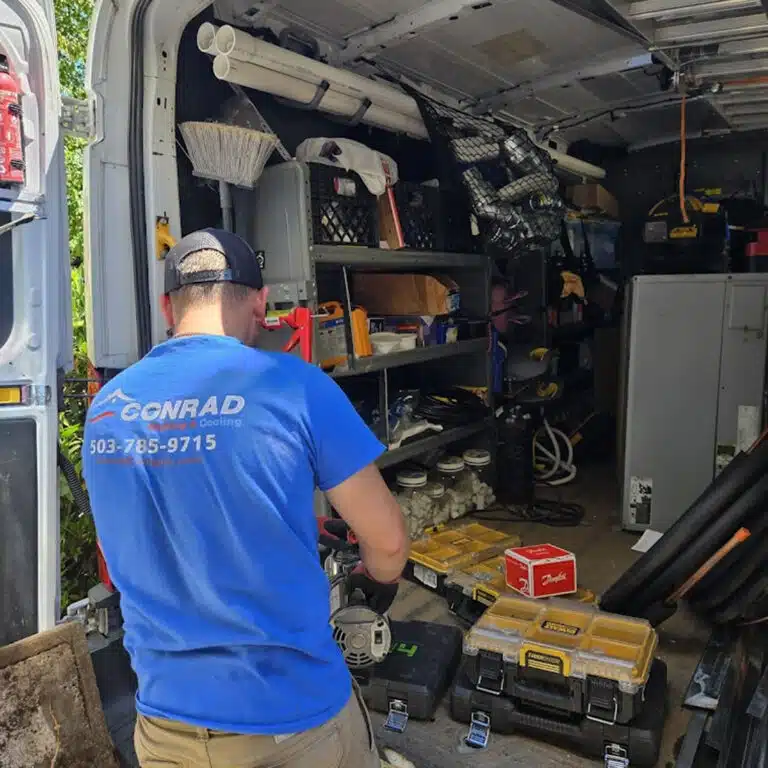
Professional Furnace Installation HVAC Service in Beaverton, Oregon
Furnace installation looks like a one-day job. Pull the old unit, drop in the new one, fire it up. Done. That’s how a lot of contractors approach it — and it’s why a lot of Beaverton homeowners end up with a brand-new furnace that short-cycles, produces uneven heat room to room, or trips the high-limit switch every February when temperatures actually matter.
The problem is almost never the equipment. It’s everything that happens before the equipment goes in.
Duct sizing is the most common failure point. A 96% AFUE variable-speed furnace connected to undersized supply ducts builds static pressure until the heat exchanger overheats. That’s not a dramatic failure — it’s a slow one. Efficiency drops, the heat exchanger develops stress cracks, and you’re looking at carbon monoxide risk within five to eight years. Not because the furnace was bad. Because the installation ignored a problem that was already there.
Before we spec any system, we run a Manual J load calculation — the ACCA method required by Oregon mechanical code. Your home’s square footage, insulation values, ceiling height, window area, and Washington County climate data all go into it. The output is a specific BTU requirement. We install a furnace that matches it, not whatever happens to be in stock at the distributor that week.
We also evaluate static pressure in the existing duct system. If the ducts can’t support the new air handler, we say so upfront — and quote the duct work alongside the equipment, not as a surprise after installation day.
Every hvac furnace installation we complete is permitted through Washington County Building Department. Gas line work, electrical connections, venting — all of it inspected and signed off. That documentation matters when you sell the house. It also matters if there’s ever an insurance claim.
Furnace Installation and Related HVAC Services

Gas, oil, and electric furnace repair across Beaverton — before a cold snap makes it urgent.

Something wrong with an existing system? We diagnose and repair all major AC brands across Beaverton and Washington County.
No heat? We repair furnaces, boilers, and electric heating systems — and restore warmth fast, done right the first time.
Ducted and ductless heat pump repair — the year-round systems Oregon homes rely on most.
One licensed team for any heating, cooling, or ventilation fault. Honest diagnosis, no guesswork.
Ductless single-zone and multi-zone systems for rooms, additions, and homes without existing ductwork.
Furnace Types We Install in Beaverton
High-Efficiency Gas Furnaces (96–98% AFUE)
The most common replacement in Beaverton. Natural gas is widely available in Washington County, and a 96% AFUE two-stage or modulating furnace is a significant operating cost improvement over the 80% AFUE units that were standard fifteen years ago. Variable-speed air handlers in this category also improve air distribution and reduce hot and cold spots. Brands we install: Trane, Lennox, Carrier, Goodman.
Standard-Efficiency Gas Furnaces (80% AFUE)
Still the right choice in certain situations — unconditioned attic or crawlspace installations where condensate drainage for a 96% unit is problematic, or budget-constrained replacements where the operational cost difference doesn't justify the upfront premium. We'll run the math and show you the payback period on both options.
Electric Furnaces
Less common in Beaverton but relevant for homes without gas service — particularly older properties in areas west of 185th where gas infrastructure isn't available. Electric furnaces have essentially zero maintenance requirements and no combustion risk. Operating cost is higher than gas at current Oregon utility rates, which is worth factoring into the decision.
Dual Fuel Systems
A heat pump paired with a gas furnace as backup. The heat pump handles heating efficiently for the 90% of Oregon winter that stays above 35°F. Below that threshold, the gas furnace takes over automatically. Higher upfront cost, lower long-term operating expense. Makes most sense in homes with existing gas service and older equipment being replaced on both the heating and cooling sides simultaneously.
Searching for HVAC Companies Near Me for Furnace Installation? Here’s What Actually Matters.
When you search for HVAC companies near me for furnace installation, you get a list. Every contractor on that list says they’re licensed, experienced, and offer great pricing. Most of them are telling the truth — but the difference between a good installation and a bad one isn’t licensing. It’s process.
Ask whether they run a Manual J load calculation. If the answer is “we use square footage,” that’s a rule of thumb, not an engineering calculation. Oregon mechanical code requires Manual J for new equipment. A contractor skipping it is skipping a code requirement and probably guessing on system size.
Ask whether they pull permits. Some contractors skip permits to shave cost and win the job on price. That saves them 45 minutes of paperwork. It costs you when an unpermitted installation shows up on a home inspection report — or when an insurance claim gets denied because the equipment wasn’t installed to code.
Ask what happens if they find duct problems during installation. The honest answer is: they tell you before they start and adjust the quote. The wrong answer is discovering it mid-job when you’re already committed.
Ask about warranty support. A manufacturer’s equipment warranty requires installation by a licensed contractor and often requires registration within 60 days. Some extended warranties — Trane’s 10-year parts warranty, for example — require the installing contractor to be a registered dealer. Know what you’re getting.
Conrad Heating and Cooling is a local Beaverton company, CCB-licensed, EPA 608 certified, and fully insured. We pull permits on every job. We run load calculations. We’re not the cheapest option on the list — and we’re not trying to be.
How Our Furnace Installation Process Works

Home Assessment & Load Calculation
We visit your home, assess the existing equipment and duct system, measure the spaces, and run a Manual J load calculation. This appointment takes about an hour and costs nothing. If there are duct issues that need to be addressed alongside the new furnace
Equipment Recommendation & Written Quote
You get a specific recommendation — brand, model, AFUE rating, air handler configuration — with a written price covering equipment, labor, permits, gas line work if needed, venting, and any duct modifications identified in the assessment.
Installation Day
Old equipment removed and disposed of. New furnace set, connected to gas, electrical, and duct system. Flue venting installed and sealed. System fired up, combustion verified, airflow balanced, thermostat calibrated. We run the furnace through a full heating cycle before we leave.
Why Choose HVAC Beaverton for Furnace Installation
Right-sized systems, clean installs, and paperwork handled — from permit to final inspection.
Family Owned & Local
A Beaverton-based crew that installs like it's our own home — no subcontractors, no shortcuts.
One-Day Installation
Most residential installs are completed in a single day, scheduled around your routine.
Licensed & Certified
CCB-licensed, EPA 608-certified installers. Every job is permitted and inspection-ready.
What Our Customers Say
Schedule Your Furnace Installation in Beaverton
- Customer Focused
- Five-Star Service
- Satisfaction Guaranteed
Frequently Asked Questions
A standard-efficiency gas furnace replacement typically runs $3,000–$5,500 installed. High-efficiency 96% AFUE systems with variable-speed air handlers run $5,000–$8,500 depending on BTU size and duct work required. Electric furnace installation runs $2,500–$4,500. You get an exact written quote after the home assessment — that number doesn't move on installation day.
Most straight replacements — same fuel type, existing ductwork in good condition — complete in one day, typically 4–7 hours. Jobs involving gas line reconfiguration, flue venting changes, or duct modifications may run into a second morning. We give you a realistic timeline before we schedule.
Yes. Oregon requires mechanical, gas, and electrical permits for furnace installation. Washington County inspects the work. We file the permits and schedule the inspection as part of the job — it's included in the quote, not a separate charge.
AFUE is Annual Fuel Utilization Efficiency — the percentage of gas that becomes usable heat. An 80% AFUE furnace sends 20% of combustion gases out the flue. A 96% unit sends 4%. At current Oregon gas rates, the difference on a typical Beaverton home's heating bill runs $150–$300 per year. The payback period on the higher upfront cost of a 96% unit is usually 5–8 years.
Usually yes — if the existing AC system is in good condition, we can install a new furnace paired with the existing outdoor condensing unit and evaporator coil. The air handler and coil compatibility need to be verified. We check this during the site assessment.
Trane, Lennox, Carrier, Goodman, and Daikin. Each has different price points, warranty terms, and parts availability in the Pacific Northwest. We'll explain the differences so you're choosing based on facts — not a brand name you saw in an ad.